
On this page
Choose where files will be analyzed
Open RenameClick and select Local to analyze files on your computer. Install RenameClick Local AI when prompted. After the model download, local processing works without an internet connection.
The direct macOS and Windows builds also support optional cloud providers configured with your own API key. Those providers receive content for analysis and have their own usage charges. The Mac App Store build does not include cloud providers.
See installation options for the full reference.
Add the files you want to rename
Open the Rename workspace and enable Rename. Leave Categorize off if the files should stay in their current folders. Choose the file-type filter, then drop files or use Browse Files.
A folder drop includes only its direct files by default. Enable Recursive to include subfolders. Unsupported extensions are skipped; a mixed folder is not a promise that every file in it can be analyzed.
With Auto Process on, analysis starts when files are added. Otherwise, click Run AI when the batch is ready. Start with files whose contents you can check before applying the same settings to a larger archive.
See the complete format list for the full reference.
Choose what the names should look like
For a descriptive name, keep the built-in RenameClick instructions. Choose Spaces, Slug Case, or another format, and select the output language. Format patterns can combine the suggested name with file dates, EXIF, or parts of the original name.
If you need a fixed structure with document fields, use Custom Instructions instead. Put the structure and language in the prompt: the ordinary Format and Output Language controls are disabled while that prompt is selected.
See writing custom naming instructions for the full reference.
See keeping original file IDs for the full reference.
Check and edit the suggestions
Compare each suggested name with the file. A useful name identifies the subject and includes only the context you need to find it later. Check extracted dates and identifiers particularly carefully.
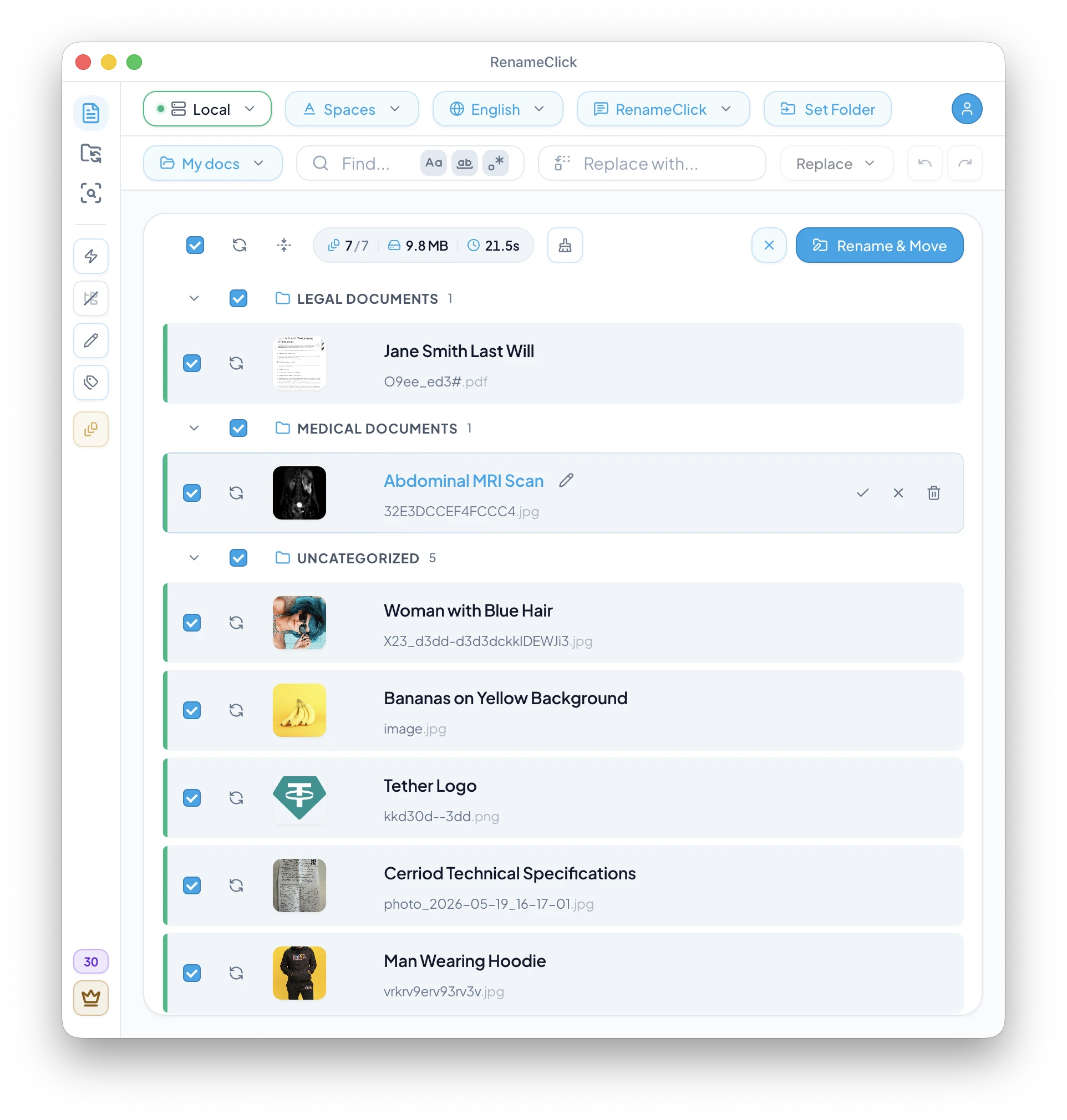
Click a suggested name to edit it. Use Find & Replace for a repeated correction across the batch; case matching, whole-word matching, and regex are available. These edits affect suggestions until you apply them.
Deselect a file you do not want to change. Retry a failed or unsuitable result after correcting its input or settings. Scanned PDFs use visible first-page content, and long text is trimmed, so details outside that context may be missed.
Apply the selected names
Click Rename Selected to write the selected filenames to disk. RenameClick preserves the extensions and resolves conflicting target names by making them unique. It does not merge or delete duplicate files.
If Categorize is also enabled, check the destination and use Rename & Move. The folder decision is separate from the naming instructions.
Analysis and preview do not use RenameClick credits. On Free, each successfully changed file uses one credit, whether renamed, moved, or both in that action; 30 are included each month. External cloud API costs are separate.
Undo an applied batch
Undo restores the names and locations from an applied operation. Rename workspace history is limited to 10 entries and is cleared when the app restarts. Keep backups of files whose earlier state you need to retain.
For incoming files that should be processed regularly, use Auto Flow after checking your naming settings. In Auto Flow, turn Watch off before using Undo or Redo.
See Rename workspace controls for the full reference.
See the Auto Flow setup guide for the full reference.